

Linda Limehouse
AI-Certified Realtor® · Meybohm Real Estate
Aiken SC · North Augusta SC · Augusta GA
Downtown Revival: How Aiken and Augusta's Revitalization Is Reshaping Nearby Neighborhoods
Aiken SC Augusta GA Downtown Revitalization Neighborhoods Buyers Walkability CSRA
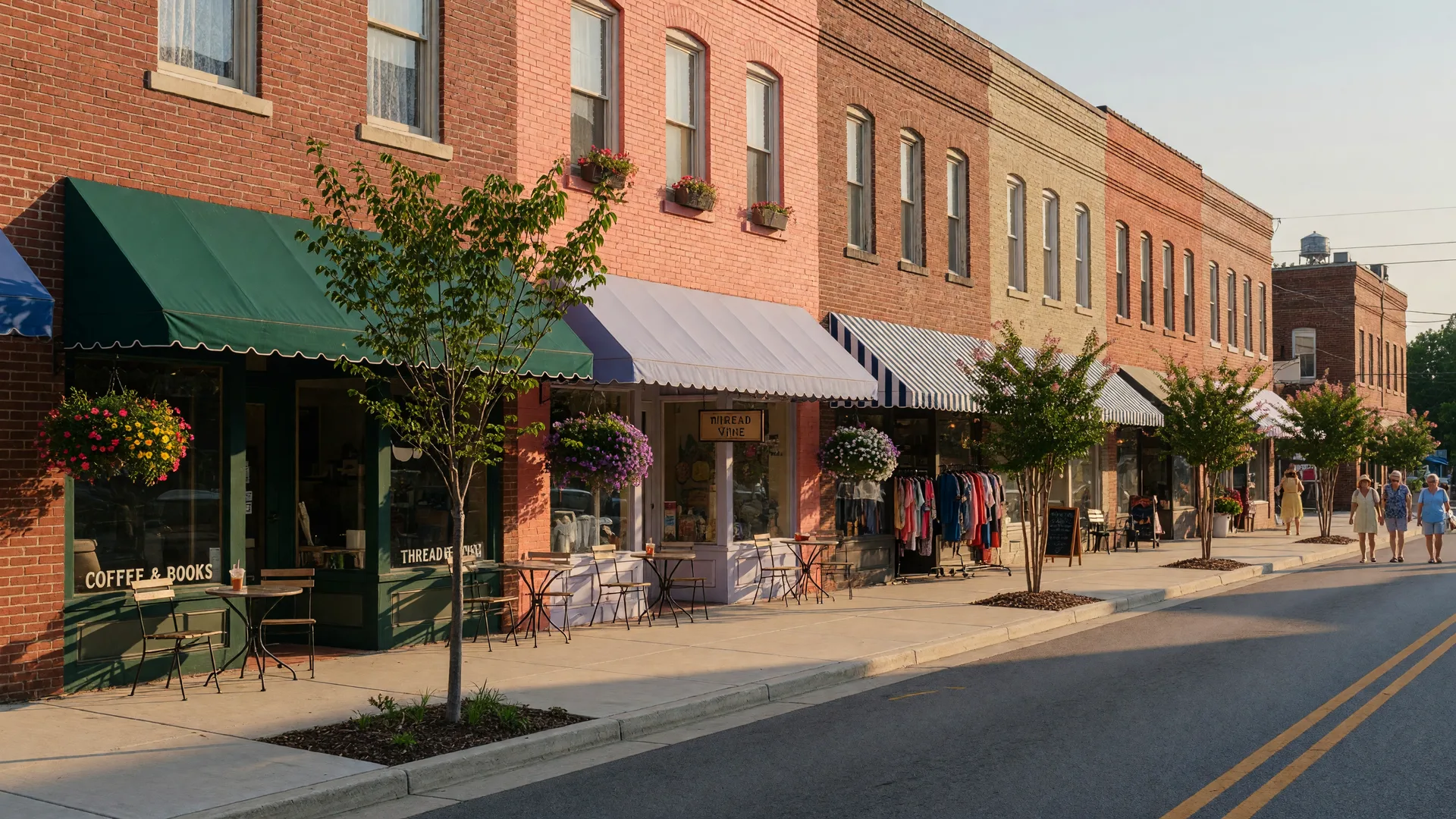
A downtown that feels alive changes the neighborhoods around it. That is exactly what is happening in Aiken and Augusta right now. Reported downtown building redevelopment, steady small-business growth, and new places to live and visit are drawing fresh attention to the blocks just outside both commercial cores. For buyers, that quiet shift is worth paying attention to.
I help buyers across the CSRA think through where a home fits their life, and the downtown revival of Aiken and Augusta has become one of the more interesting questions in the local market. This post walks through what has been reported downtown, why it matters for nearby neighborhoods, who it tends to appeal to, and what to weigh before you buy.
Key Takeaways
- Both Aiken and downtown Augusta are mid-revitalization, with reported building projects, new shops and restaurants, and new residential in the cores.
- Walkable, buzzy downtowns tend to make nearby blocks more desirable, and amenities often draw foot traffic, investment, and identity outward.
- Empty nesters, young professionals, families, and investors each find something different to love near a thriving core.
- Revitalization brings tradeoffs too: traffic, events, noise, parking, and, sometimes, higher prices near the core.
In This Article
What's Happening Downtown
Let me start with what has actually been reported, because the momentum in both cities is real even if the numbers are still working themselves out.
On the Aiken side, the City of Aiken has been pursuing redevelopment of several key downtown buildings in 2026, and the mayor's 2026 goals call for that reinvestment along with zoning updates to support new uses. Public reporting has also tracked new restaurants, retail, and small businesses opening around the core, including plans for a new eatery on Laurens Street projected to open in summer 2026, and at least one local businesswoman expanding her business into a new downtown storefront this year.
Aiken's downtown also benefits from an active Main Street-affiliated program, the Aiken Downtown Development Association (ADDA), which supports merchants, works to preserve historic character, and helps guide economic growth. On top of that, a larger mixed-use project for the core has been approved and is moving through the approvals process, including a Design Review Board process tied to the renovation of the municipal building. It was announced with an eye to bringing new energy to the center of town.
On the Augusta side, the energy is concentrated around the riverfront and the core districts. Public reporting has described renewed activity along the Riverwalk (which reopened after storm repairs), continued work in districts like Laney-Walker that border the urban core, new residential units coming into the downtown (including upper-floor living along Broad Street), and a steady stream of business openings. The City, the Downtown Development Authority, and private investors are all part of the same reported story, with the Riverwalk, museums, the arts, and the dining scene anchoring much of the appeal.
Traffic, active development, and events continue to draw visitors into downtown Augusta, and both downtowns are, in plain terms, investing in being places people want to live, work, and visit.
Why Downtown Energy Changes Neighborhoods
Here is the part that is less about the news and more about how neighborhoods actually behave. When a downtown thrives, the neighborhoods around it tend to inherit some of that foot traffic, investment, and identity. The connection is not a guarantee, but it is consistent enough that buyers ask about it.
Walkable, buzzy downtowns make nearby blocks feel more desirable. A house three blocks from an active Main Street is not the same home as an identical house on a quieter, car-dependent street on the edge of town. One offers convenience and energy; the other offers space and calm. Neither is better, but they attract different buyers.
New restaurants and shops give a neighborhood a reason to be visited, not just lived in. That matters for homeowners (guests have somewhere to go) and for anyone even casually thinking about resale (a lively corridor is easy for other buyers to picture themselves in).
Speaking in general terms rather than promising specific numbers, property values and renter demand tend to follow amenities. Where a neighborhood feels like a place people actually want to be, market interest usually builds over time. The key word is tend; treat it as a signal, not a promise.
The Multi-Generational Appeal
One of the most interesting parts of the downtown revival is how differently each age group reads it. In my experience, here is who the energy near Aiken and Augusta tends to attract.
Empty nesters and retirees. Being able to walk to dinner, events, and passive entertainment without maintaining a big yard is a major draw near these downtowns. For many buyers in this chapter of life, downsizing to a smaller home near the action is precisely the trade they want to make.
Young professionals. Proximity to coffee shops, gyms, bars, and short commutes is often at the top of the list. Many are looking at condos, townhomes, and lofts near the core where the lifestyle is built around the neighborhood rather than a car.
Young families. Boutique streets, the parks, and a strong sense of community resonate here. For families, local schools and a vibrant Main Street can be a genuine plus, even if the yard is smaller than a suburban lot.
Investors and second-home buyers. Revitalization signals future interest and, often, more stable demand. For these buyers, a neighborhood on the front end of improvement can be a more interesting prospect than one that has already fully appreciated.
Where to Look
If the downtown revival is appealing to you, here is where to start scouting in each city.
In Aiken, look at the blocks around Laurens Street and the ADDA footprint, plus the transition streets that lead out of the commercial core. These are the areas most directly connected to the reported reinvestment and the daily foot traffic of shops and eateries.
In Augusta, keep an eye on the riverfront and the districts surrounding the Riverwalk and the main corridor. These are the zones where the reported residential and business energy is concentrating.
As a rough, general guide, neighborhoods that sit within about a 10 to 15 minute walk, or a short drive, of the core tend to benefit most from downtown energy. Proximity is the common thread.
It is also worth noting that new residential projects in both cores are steadily increasing the walkable options available to buyers, which makes this corner of the CSRA more interesting today than it was even a few years ago.
The Tradeoffs to Weigh
No story is all upside, and downtown energy comes with real tradeoffs. It is better to weigh them before you buy than to be surprised after closing.
Downtown energy can bring traffic, events, and noise. A neighborhood that is buzzing on a Saturday may not be the peaceful retreat you pictured on a busy event weekend. And anyone who has circled a block a few times knows that parking near an active core can sometimes be a challenge.
Historic neighborhoods have preservation rules. Much of Aiken's charm near the core comes with oversight on exterior changes. If that appeals to you, wonderful. If not, learn the rules first. I walk through this at length in my guide to Aiken's downtown historic district rules.
Resale audiences differ by age and lifestyle. Know who you are buying for. A condo near the action does not appeal to the same buyer as a bungalow on a quiet tree-lined street, even if they sit in the same neighborhood.
Prices near downtown cores can run higher for the convenience. That premium can be worth it, but it should be a deliberate choice, not a surprise.
Ultimately, lifestyle fit is the test, not just the hype. A downtown can be thriving and still be the wrong home for you, and that is okay.
What to Do if This Appeals to You
If living near an active downtown sounds like your kind of life, do a little legwork before you look at listings.
First, tour the neighborhoods at different times. See the same block on a weekday daytime and on a weekend evening. The feel can change completely, and you want to know which version you are actually buying into.
Second, talk to local shopkeepers and residents, and walk the blocks. People who live and work in a neighborhood are the best source of honest insight, from parking realities to which blocks are quietest.
Third, ask about pending developments. What is approved, what is planned, and what is still rumor? A neighborhood can look one way today and meaningfully different in a few years.
And keep a simple truth in mind: the time to notice an area is often when it is improving, not after it has fully appreciated.
Finally, work with a local agent who can point you to the specific blocks that match your priorities rather than the ones that merely look good from a car.
The Bottom Line
Aiken and downtown Augusta are both mid-revitalization, and that is good news for the neighborhoods around them. Walkable, active cores are drawing people, investment, and identity, and the effects are rippling outward into the blocks buyers are starting to discover.
Each age group will find something different to love, whether it is the walkability for empty nesters, the energy for young professionals, the community for families, or the long-term signal for investors.
And the direction of the story is worth noting: new energy is increasingly moving into these neighborhoods. If living near a lively core sounds like the right fit for your chapter of life, it is worth taking a closer look sooner rather than later.
Curious About Neighborhoods Near Aiken or Augusta's Downtowns?
Fill out the form below and I will help you find the right one for your chapter of life. Explore our neighborhood guides first if you are just getting oriented.
Linda Limehouse
First AI-Certified Realtor® | Meybohm Real Estate
Licensed in SC & GA
Serving Aiken, North Augusta, Augusta, and the greater CSRA.
Reviewed by Linda Limehouse, REALTOR® · Licensed in South Carolina and Georgia · More than 20 years of CSRA real estate experience.
Related Resources
- › Aiken SC Real Estate
- › Augusta GA Real Estate
- › Downtown Aiken vs Suburban Living
- › Historic District Rules: What Aiken's Downtown Historic Buyers Need to Know
- › Condo vs. Single-Family: The HOA Truth Downtown Augusta Buyers Should Know
- › CSRA Neighborhoods Overview
- › Contact / Book a Consultation