

Linda Limehouse
AI-Certified Realtor · Meybohm Real Estate
Aiken SC · North Augusta SC · Augusta GA
Why Early Fall Is a Smart Window for Young Professionals to Buy Their First CSRA Home
Aiken SC North Augusta SC Augusta GA Young Professionals First-Time Buyers Starter Homes Fall Market CSRA
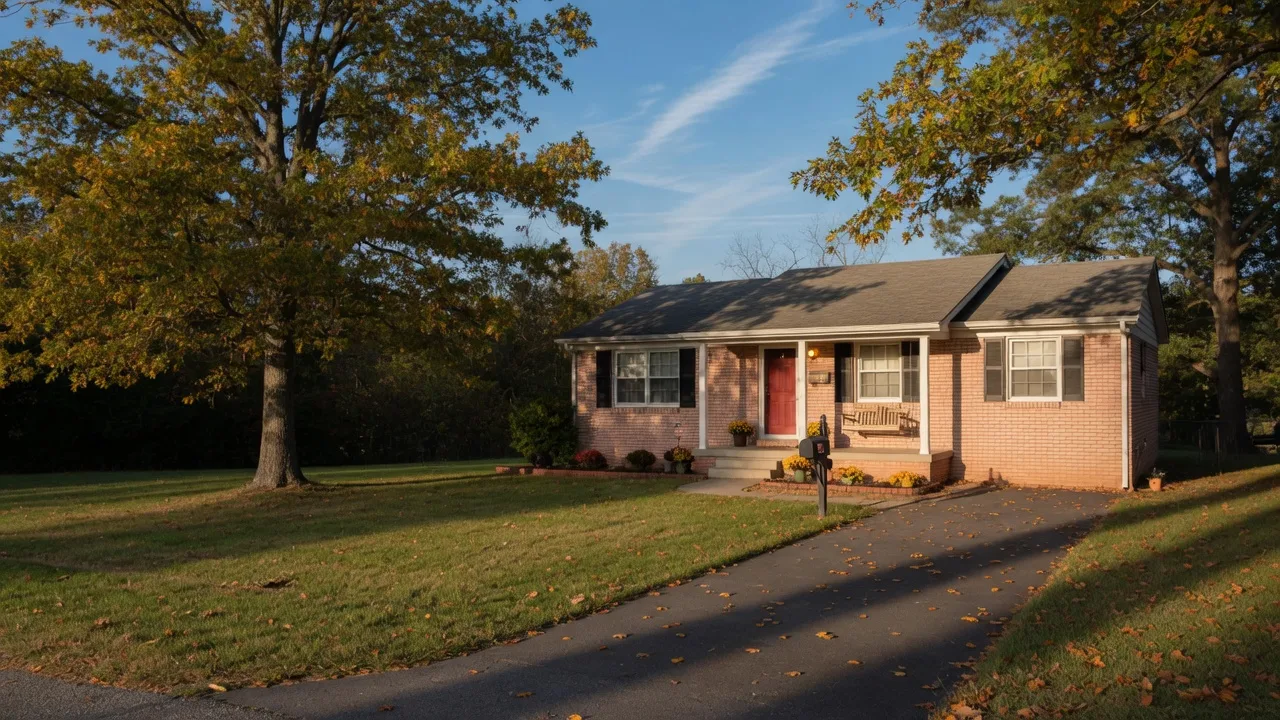
If you are a young professional in the CSRA who has been renting for a few years, you have probably thought about buying. The question is always when. Here is a case for why early fall, right about now, can be one of the smartest windows of the year to make the move from renter to owner, before the holidays and year-end work crush take over your calendar.
The CSRA, spanning Aiken SC, North Augusta SC, and Augusta GA, is the kind of market where starter homes are genuinely within reach for first-time buyers. I have spent more than 20 years helping buyers make that first leap, and I have seen fall buyers succeed for reasons that have nothing to do with luck: they had time, they had a plan, and they started early enough to give the process room to breathe. This guide walks through why this window matters and exactly how to use it.
Key Takeaways
- Early fall is one of the calmest stretches of the year to house-hunt: no holiday travel, no year-end scramble.
- The busiest buying season has wound down by early fall, so a starter home can mean less competition and more motivated sellers.
- A mortgage payment on a modest starter home can be comparable to what many renters already pay in CSRA, and you build equity while you pay it.
- With pre-approval and an intentional search, you can be under contract by mid-fall and closed before the holidays.
- The best time to buy is when your finances are ready and you have found a home that fits. Market conditions vary, so local guidance and real numbers matter.
In This Guide
The Fall Calendar Works in Your Favor
Think about what your actual calendar looks like in November and December. The holiday season eats up weekends with travel, family, and events, leaving little energy or free time for house hunting. On top of that, year-end work deadlines and performance reviews pile up right when you would otherwise be touring homes and writing offers. The result is that the internet has the worst possible time to try to wrap up one of the biggest purchases of your life.
Early fall is often a calmer stretch. The holidays have not started, the end-of-year scramble has not begun, and the weekends are still yours. That is not a small thing. It means you can actually take the time to look, drive through neighborhoods, compare a few homes side by side, and make a thoughtful decision instead of a rushed one.
And there is a second payoff: buying before the holidays means you are moved in before family visits arrive and before the new year starts. You get to host Thanksgiving in your own place, wake up on New Year's Day in a home you own, and start the year with done rather than a to-do list.
The Timing Can Benefit Buyers
Seasonality is real in real estate, and by early fall the busiest spring buying season has wound down in many markets. That shift changes the dynamic in a few useful ways.
- Sellers may be more motivated. Sellers who listed in the spring and have not sold yet may be ready to talk. Their timelines are real: they may have a move already planned or a home under contract on the other end.
- The market can feel more balanced. A less frantic market often means a slightly more balanced, less rushed process, with room for inspection, questions, and negotiation.
- Less competition. You may face fewer competing buyers than in the spring, which gives your offer more room to stand out on the merits rather than on price escalations alone.
One important caveat: every market is local. Aiken, North Augusta, and Augusta each have their own rhythm, and your specific price range and neighborhood can look different from the regional trend. That is why the first step is to get a current read on what this fall actually looks like where you are looking, from an agent who works in that area every week.
This is precisely why my Buying Guide starts with a market conversation before it ever talks about home sizes. The right timing for you, personally, depends on where, what range, and when you want to be settled.
Why a Starter Home Makes Sense for Young Professionals
There is a reason starter homes are called that: they are the first step, not the last one. And for a young professional, a starter home lines up with where you are in your career and your finances.
- You build equity instead of paying rent. Every payment on a mortgage builds ownership. Every rent payment builds someone else. Over time, that difference can be significant.
- Payments can be comparable to rent. In the CSRA, payments on a modest starter home can be comparable to what many renters already pay. Your exact numbers depend on price, interest rate, taxes, insurance, and your down payment, so you will want a lender to run them for your situation.
- A locked-in cost. With a fixed-rate mortgage, your principal and interest payment stays the same for the life of the loan. That can bring stability, compared with rent that often rises year after year.
- Potential tax factors. Homeowner tax benefits may factor into your monthly picture, but benefits and deductions depend on your personal situation. Talk to a tax professional about what applies to you.
- Stability and more space. You gain roots and, often, more square footage than the apartment you are currently renting.
A "starter home" does not have to mean tiny or rough. In Aiken, North Augusta, and Augusta, it usually means a smartly priced home that needs little to nothing, or a smaller home you can grow into. Over time, owners move up when they sell, take the equity they have built, and put it toward the next home.
The Rent vs. Buy Math to Think About
The honest way to decide between renting and buying is to understand the actual numbers rather than the averages. Start by comparing the full cost of your current rent against a mortgage payment that includes principal and interest, property taxes, and homeowners insurance, plus a small slice of ongoing maintenance.
- Get a real pre-approval. A lender's pre-approval tells you what your payment could actually be, not an estimate from a website.
- Remember the expenses renters never see. Repairs, appliances, and upkeep are real costs of ownership, and those are far easier to plan for when you know they are coming than to discover them after closing.
- Know the variables. The exact math depends on the home price, the interest rate, and your down payment, and all three pay a different result for every buyer.
- Run the numbers with a local lender. Someone who knows CSRA property taxes (they differ between South Carolina and Georgia) and typical insurance costs will give you a far more realistic picture than a generic calculator.
If you want the full homework, my From Renter to Homeowner guide walks through credit, savings, debt, and pre-approval step by step, so you arrive at the lender conversation ready.
Your Timeline Through the Fall
One of the best reasons to act in early fall is that the calendar supports a relaxed, unrushed path to closing. Here is what a realistic timeline can look like:
- Late summer to early fall, meaning right now: get pre-approved, define your budget and your must-haves. If you have not started, do not panic; a pre-approval takes days, not months, and this is exactly the window to start.
- Early to mid-fall: tour neighborhoods, compare options, and start making offers. With a calmer calendar, you can be present and deliberate.
- Mid-fall: under contract with a reasonable search on a realistic market for your needs.
- One month to close: closings typically take about a month, which means a mid-fall contract lands you in your new home before the holiday rush.
- End of the year: moved in, set, and ready to enjoy the holidays and the new year in your own place.
Every transaction moves at its own pace, and some closings run longer, which is precisely why starting now, while you have schedule room, is the smart play. You gain a buffer that December simply will not give you.
Common Fears (and the Reality)
I hear the same worries from almost every first-time buyer, and they are worth naming, because each one has a grounded answer.
- “Prices might drop.” No one can time the market perfectly, and waiting has a real cost: you keep paying rent, and the market can move in either direction. The question is not whether prices will change. It is whether your finances are ready and a home you can afford has fit your life.
- “I don't have a huge down payment.” You do not need to put down; a modest starter home, 3% conventional loans and 3.5% FHA loans are common, and first-time buyer programs in South Carolina and Georgia can help. Talk to a lender about what you actually qualify for.
- “The process is scary.” It is a well-trodden path millions of buyers walk every year, and a good agent and lender walk you through it room by room. You are not expected to know everything; that is the point of having a team.
- "It's a buyer beware market." It isn't. It is just about making an informed, confident decision with inspections, real numbers, and a clear written contract.
The best time to buy, better than any season, is when your finances are ready and you have found a home that fits you. Early fall simply clears the schedule so you can get there before the year takes over.
How to Start This Week
If this rings true with you, here is a simple sequence of actions for the next five working days:
- Reach out to a local agent for a current market picture of starter-home options in your towns of interest, including what early fall looks like.
- Talk to a lender about pre-approval and first-time buyer programs in South Carolina or Georgia, whichever state you want to buy in.
- List the neighborhoods that fit your commute, lifestyle, and budget. It does not need to be perfect; a first draft gets you hours.
- Set a realistic timeline, and mark the fall milestones on your calendar. You have more time right now than you will in December.
- Make a plan and take the first step this week. The morning while the calendar is still quiet.
The single biggest factor, I have seen separate first-time buyers who succeed from the ones who stay renters indefinitely, is simply starting before the urgency arrives.
The Bottom Line
Early fall gives young professionals in the CSRA something rare: a quieter calendar, a potentially more balanced market, and a realistic path to be in their own home before the holidays. That combination is harder to find at any other point in the year.
The transition from renter to owner does not have to be intimidating. It is a well-supported, well-trodden path that thousands of buyers complete every year. The CSRA is a place where starter homes are attainable, and someone who knows the local market can help you prove it: what is available, what it costs, and what your payment would genuinely look like.
If you have been thinking about owning, this window is worth taking seriously, and it will not close on its own. September has a quiet, productive stretch ahead. The smart move is to use some of it.
Linda's Local Insight
In more than 20 years helping buyers across the CSRA, I have noticed that the ones who buy close to the holidays are rarely the happy ones. It is the buyers who do the work in September and October, who get pre-approved, tour with intention, and give themselves a closing date before Thanksgiving, that tell me it was the best decision they made all year.
As an AI-Certified Realtor through the Krem Institute of Artificial Intelligence, I use AI tools to watch new listings in the CSRA, track changing market conditions, and make sure my first-time buyers see the right starter homes as soon as they hit the market. Local experience and AI are watching them together.
Starting is simple: one conversation can give you a current picture of starter-home availability in Aiken, North Augusta, or Augusta, and the numbers that matter for your budget. Let us make a plan together.
Thinking about your first home this fall?
Fill out the form below and I'll help you find a starter home that fits your budget and your life in the CSRA. We will start with your numbers and the neighborhoods that work for you, so the search itself stays calm and steady.
Linda Limehouse
First AI-Certified Realtor | Meybohm Real Estate
Licensed in SC & GA
Serving Aiken, North Augusta, Augusta, and the greater CSRA.
Frequently Asked Questions
Is early fall actually a better time to buy a first home than spring?
It can be, depending on the market and your situation. The busiest buying season has often wound down by early fall, so you may face less competition from other buyers and sellers may be more open to conversation. Early fall is not a guarantee of a better deal, but it can be a calmer, more thoughtful process. Your local market conditions matter more than the season, which is why it helps to get a current picture from an agent who works in the specific neighborhoods you are considering.
How much do I need to save for a down payment on a starter home in the CSRA?
There is no single number. Conventional loans can allow as little as 3% down, FHA loans commonly require 3.5%, and VA loans for eligible military buyers can require zero down. First-time buyer assistance programs in both South Carolina and Georgia can also help with down payment and closing costs, depending on income and other qualifications. A local lender can give you a realistic figure for your specific situation before you start shopping.
How long does the home buying process take from offer to closing?
Once you are under contract, a closing typically takes about a month, though timing can vary with loan type, lender capacity, and the condition of the home. That is why an early fall start can work well: getting pre-approved and searching in September gives you a realistic path to be in your home before the holidays, with room in the timeline for inspections and appraisal.
Should I wait to see if prices come down?
No one can time the market with certainty, and prices can move in either direction. While you wait, you continue paying rent, and mortgage rates and inventory can change too. The more practical question is whether your finances are ready and whether a home you can comfortably afford is on the market. A lender's pre-approval and a local market conversation will tell you more than watching headlines.
What if my rent feels similar to what a mortgage payment would be?
That happens more often than people expect, especially with smaller starter homes. Compare your full rent to the whole cost of owning, including principal and interest, property taxes, homeowners insurance, and maintenance. A lender can preapprove you and show the real numbers for a specific price range, and a local agent can point you to neighborhoods where starter homes fit a young professional's budget.
Explore More
These resources can help you take the next step with confidence:
- From Renter to Homeowner: A Step-by-Step Mortgage Prep Guide : the full homework for credit, savings, and pre-approval before you shop.
- First-Time Home Buyer Guide : step-by-step advice from pre-approval through closing.
- Getting Your Finances Ready to Buy a Home in the CSRA : a deeper look at credit, down payments, and pre-approval.
- CSRA Neighborhood Overview : side-by-side look at Aiken, North Augusta, and Augusta neighborhoods.
Reviewed by Linda Limehouse, REALTOR®. Licensed in South Carolina and Georgia. More than 20 years of CSRA real estate experience.
SC License: 67440 | GA License: 323267